In NYC, industrial and office cleaning often involves concentrated disinfectants, degreasers, solvents, and specialty chemicals that can cause burns, respiratory issues, or toxic exposure if handled incorrectly. These risks are amplified in:
- High-rise office buildings with limited ventilation
- Shared commercial spaces with high occupant density
- Older buildings with legacy materials and systems
A structured approach to chemical hazard management helps you:
- Protect employees and contractors from acute and long-term health issues
- Reduce liability and regulatory risk for your business
- Maintain a safe, healthy environment for staff and visitors
For any NYC-based cleaning program, chemical safety should be treated as a core operational priority, not an afterthought.
Understanding Your Chemical Inventory
The foundation of safe industrial cleaning is knowing exactly what chemicals are in use. A chemical inventory isn’t just a spreadsheet; it’s the backbone of your hazard control strategy.
Key steps:
- Maintain an up-to-date list of all cleaning agents, disinfectants, solvents, and specialty products used on site.
- Keep Safety Data Sheets (SDS) accessible for each product so supervisors and cleaners can quickly identify hazards and first-aid measures.
- Classify chemicals by hazard type (corrosive, flammable, oxidizer, toxic, irritant, etc.) so you can plan storage and PPE appropriately.
This level of clarity makes it much easier to design training, choose PPE, and develop spill response procedures that align with real-world risks.
Personal Protective Equipment (PPE) for Cleaning Chemicals
PPE is your frontline defense when engineering controls and safe work practices are not enough. For chemical-intensive cleaning in offices and industrial sites, the most common PPE categories include:
- Hand protection: Chemical-resistant gloves (e.g., nitrile, neoprene) selected based on the specific product in use.
- Eye and face protection: Safety glasses or goggles to prevent splashes; face shields for high-splash or decanting tasks.
- Respiratory protection: Masks or respirators where there is a risk of inhaling vapors, aerosols, or fine mists.
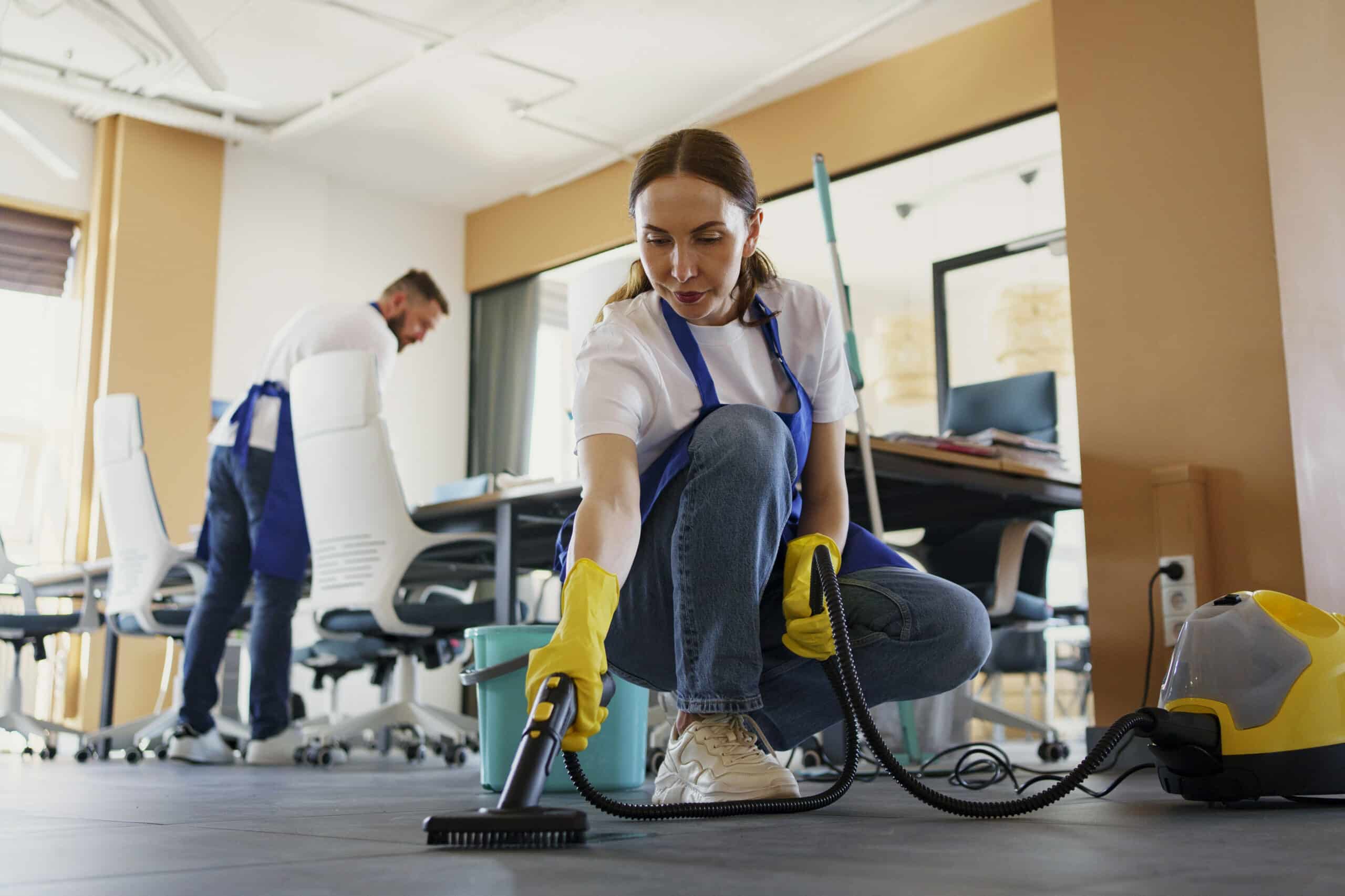
- Body protection: Aprons or coveralls to protect skin and clothing from corrosive or staining substances.
To be effective, PPE programs should:
- Match PPE type and material to each chemical’s hazards
- Include fit, comfort, and sizing considerations so employees actually wear the gear
- Incorporate training on donning, doffing, cleaning, and replacing PPE
- Be integrated into daily work routines, not treated as “optional extras”
In a city like New York, where cleaning teams often work overnight or in tight schedules, well-planned PPE helps workers stay safe without slowing operations.
Safe Storage of Cleaning Chemicals
Chemical storage in NYC office and industrial environments is often constrained by space, but safety requirements still apply. A well-organized chemical storage setup should:
- Separate incompatible substances (e.g., acids from bases, oxidizers from organics) to prevent dangerous reactions.
- Use labeled, dedicated cabinets or rooms with clear signage indicating hazards and access restrictions.
- Keep containers properly sealed, labeled, and in good condition to prevent leaks and evaporation.
- Avoid storing large volumes of concentrated chemicals in high-traffic or poorly ventilated areas.
Good storage practices also support inventory control, reducing waste, loss, and the temptation to transfer chemicals into unmarked or inappropriate containers.
Spill Prevention and Spill Response Planning
No matter how careful your team is, spills happen. What matters is how prepared you are when they do.
A robust spill plan should include:
- Risk assessment: Identify where spills are most likely (storage rooms, mixing areas, loading zones, janitor closets) and what chemicals are involved.
- Spill kits: Stock absorbents, neutralizers, compatible tools, and disposal bags tailored to the types of chemicals on site.
- Clear procedures: Define when staff should handle a spill themselves and when they should evacuate and escalate.
- Communication: Ensure everyone knows who to call, how to report an incident, and when building management or emergency services must be notified.
Regular drills and refresher training help teams respond calmly and effectively, minimizing both safety and business disruption.
Training and Culture: Turning Rules into Habits
Policies and written procedures only work if people understand and follow them. For chemical hazard management to be effective:
- New hires should receive structured onboarding about chemical risks, PPE, labeling, and emergency procedures.
- Supervisors should reinforce safe practices during walkthroughs, toolbox talks, and shift briefings.
- Refresher training should be scheduled regularly to address new chemicals, updated procedures, or lessons learned from incidents.
Building a culture where employees feel comfortable raising concerns or reporting near misses leads to continuous improvement and fewer serious incidents over time.
Special Considerations for NYC Offices and Facilities
Office and commercial environments in NYC have unique characteristics that affect chemical management:
- After-hours work: Cleaning crews often operate when most staff are gone, so clear communication, access to SDS, and emergency contacts are essential.
- Shared buildings: Multiple tenants may use different products; coordinating standards with building management reduces conflicting practices.
- Ventilation constraints: Older or tightly sealed buildings require careful selection of low-odor, low-VOC products and attention to ventilation during heavy cleaning tasks.
Choosing a cleaning partner that understands city-specific constraints helps ensure safety measures are realistic and tailored to your space.
Selecting Safer Chemicals Without Sacrificing Results
Managing chemical hazards is not only about protection it’s also about smart product choices. Many organizations are shifting towards:
- Concentrated products with dosing systems to reduce handling and overuse
- Low-toxicity, low-VOC formulations that are safer for both cleaners and building occupants
- Disinfectants and degreasers that meet performance standards while minimizing corrosiveness or volatility
A thoughtful chemical selection process reduces the level of PPE needed, lowers spill risk, and improves indoor air quality, especially important in office settings.
Why Partnering with the Right Cleaning Company Matters
Even the best-written policies will fail without an experienced, safety-focused cleaning partner. For industrial and office environments, the right partner should:
- Have established protocols for chemical inventory, labeling, storage, and spill response
- Provide ongoing safety and PPE training to their teams
- Use products appropriate for your building type, occupancy, and industry
- Coordinate closely with your facility or EHS team on site-specific risks
This takes a substantial burden off facility managers, allowing them to focus on core operations while knowing that cleaning-related chemical risks are controlled.
How XYZ Cleaning Supports Safe Chemical Management in NYC
XYZ Cleaning specializes in office and industrial cleaning in New York City, with a strong focus on chemical safety and risk control. Our teams are trained to work with a wide range of cleaning and disinfecting products while prioritizing:
- Proper PPE selection and consistent use on every job
- Secure storage and labeling of all chemicals on site
- Clear, documented spill response procedures tailored to each facility
- Ongoing communication with clients about product choices and safety considerations
By combining professional cleaning standards with disciplined chemical management, XYZ Cleaning helps NYC businesses keep their spaces clean, compliant, and safe for everyone who walks through the door.
If you are reviewing your cleaning program or updating your safety protocols, XYZ Cleaning can work with your team to align chemical use, PPE, storage, and spill response with your corporate and regulatory requirements, while still delivering the spotless, healthy workplace your staff expects.