Phone:
(516)349-8800
Physical address:
958 W Jericho Turnpike, Smithtown, NY 11787
50 Years in Business | Est. 1975
50 Years in Business | Est. 1975
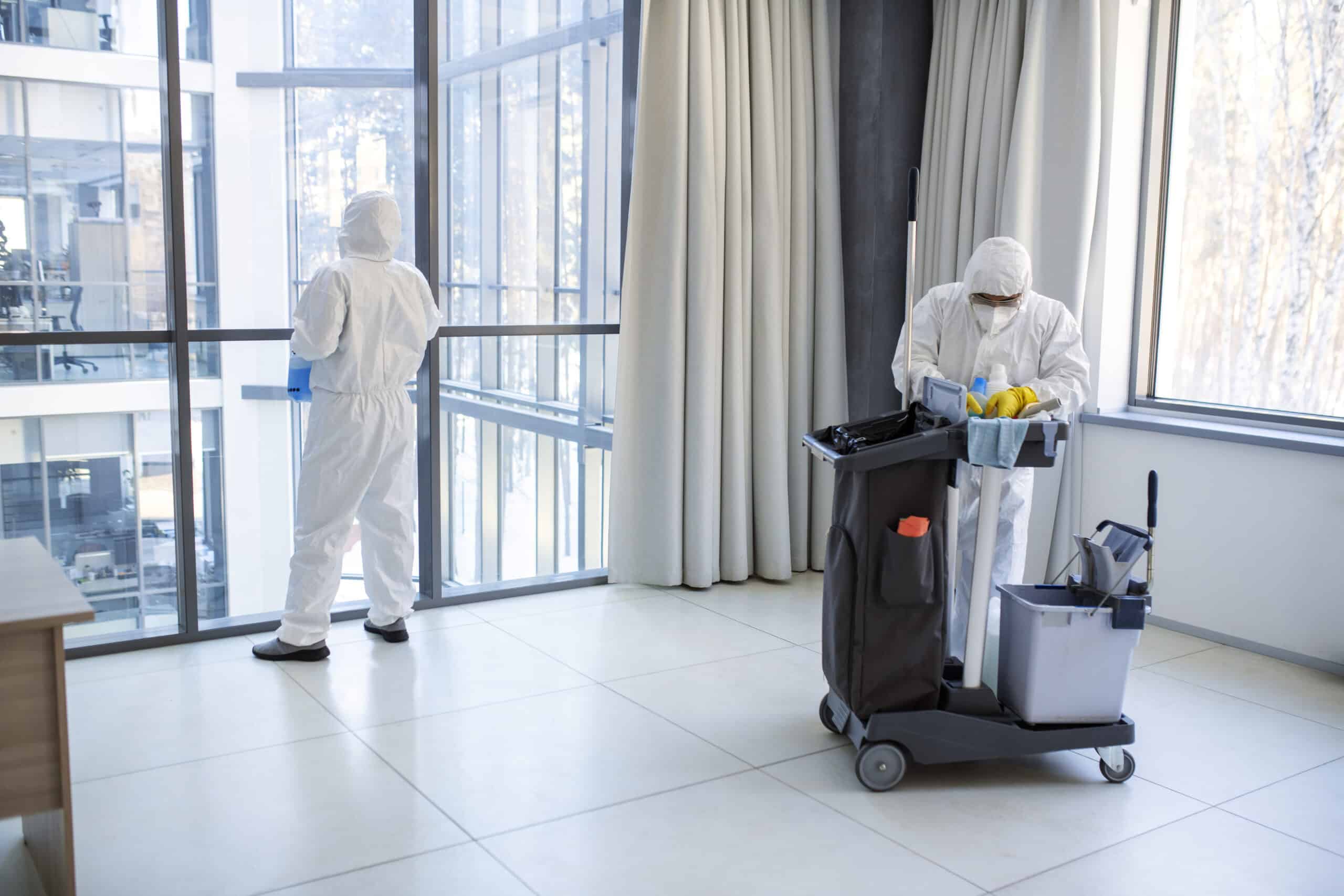
Industrial cleaning in NYC demands strict adherence to safety standards to protect workers tackling tough jobs in offices, factories, and high-rises. OSHA compliance ensures crews handle chemicals, heights, and machinery without unnecessary risks, keeping everyone safe while delivering spotless results.
OSHA sets clear rules for general industry cleaning under 29 CFR 1910, covering everything from chemical handling to slip prevention. In New York City, private sector cleaners follow federal OSHA directly, while state plans like PESH add oversight for public jobs.
These standards focus on hazard recognition, training, and controls to minimize injuries. NYC’s dense urban environment, think skyscraper windows and bustling warehouses, amplifies the need for compliance, preventing common issues like chemical burns or falls.
OSHA mandates a written Hazard Communication program for all cleaners. This includes labeling chemicals, safety data sheets, and worker training on risks like corrosives or fumes.
The Sanitation standard (1910.141) requires clean workspaces, proper waste disposal, and ventilation to control dust and vapors. Bloodborne Pathogens rules apply for any biohazard cleanup, demanding specific protocols in office restrooms or post-construction sites.
Recordkeeping tracks injuries via OSHA 300 logs, with electronic submission required for larger firms. Regular inspections catch issues early, ensuring ongoing compliance.
PPE forms the last line of defense in industrial cleaning. Gloves resist cuts and chemicals, nitrile for solvents, neoprene for acids. Eye protection like goggles shields against splashes, while respirators filter silica dust or VOCs in confined spaces.
Footwear with slip-resistant soles prevents falls on wet floors, a top NYC hazard. Hard hats protect during high-reach cleaning, and full-body harnesses secure window washing at heights.
Employers assess hazards first, provide PPE at no cost, train on use, and maintain gear. Proper fit ensures effectiveness, loose gloves fail fast.
Slips, trips, and falls top OSHA’s list for cleaning crews. Use wet floor signs, cord management, and non-slip mats religiously. Chemical mixing risks explosion or toxic gas, always follow dilution ratios and compatibility charts.
Ergonomics matter: lift heavy trash with bent knees, use carts for loads over 50 pounds. Ventilation combats indoor air quality issues in sealed office towers. Lockout/tagout procedures isolate machinery before cleaning to avoid startups.
Daily checklists cover these basics, turning potential hazards into routine safeguards.
OSHA requires initial and annual training on specific hazards. The HazCom standard demands eight hours for new hires, covering GHS labels and emergency responses.
NYC cleaners train on city-specific risks like high-rise pressure washing or subway-adjacent work. Hands-on sessions teach PPE donning, spill response, and evacuation drills. Certification like OSHA 10-hour General Industry builds confidence and meets client demands.
Refresher courses keep skills sharp, with documentation proving compliance during audits.
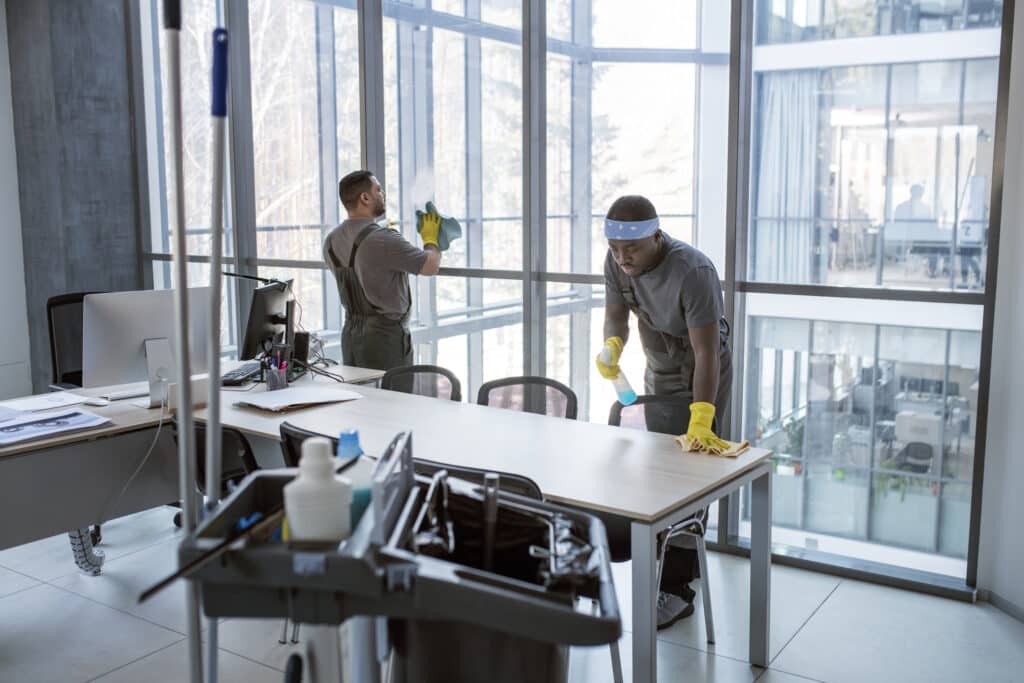
Offices hide dangers under polished floors. Stripper chemicals eat through skin without gloves. High-dust buffing releases particulates harmful to lungs. Cluttered server rooms trip wires underfoot.
Post-renovation cleaning exposes silica from drywall sanding, demanding N95 masks. Night shifts face lone worker risks, buddy systems or check-ins mitigate isolation.
Proactive assessments map these threats, with engineering controls like fume extractors leading the way.
| Task | Gloves | Eye/Face | Respiratory | Footwear |
|---|---|---|---|---|
| Floor Stripping | Chemical-resistant | Goggles | Half-mask | Slip-resistant |
| Window Washing | Cut-resistant | Face shield | None | Harness-compatible |
| Dusting/Vacuuming | Cotton-lined | Safety glasses | N95 mask | Steel-toe |
| Biohazard Spill | Double nitrile | Full faceshield | Powered air | Disposable booties |
| Pressure Washing | Waterproof | Impact goggles | Full respirator | Non-slip |
Match PPE to tasks for maximum protection.
NYC’s Department of Buildings enforces OSHA alongside local codes for facade cleaning. Scaffolding and swing stages require permits, inspections, and licensed riggers.
PESH ramps up audits in high-risk zones like Manhattan manufacturing. Fines hit $15,000+ per violation, escalating for repeats. Voluntary Protection Programs reward top performers with inspection waivers.
Stay current via OSHA’s NYC office newsletters and annual updates.
Spills demand immediate action: evacuate, contain, neutralize, and report. Acid spills need bicarbonate dabs; solvents get absorbents. Eyewash stations and showers must sit within 10 seconds travel distance.
First aid kits stock burn dressings and eye irrigation. Spill kits include absorbents, PPE, and labels. Train everyone on 911 protocols and SDS emergency sections.
Mock drills build muscle memory, cutting response time in real crises.
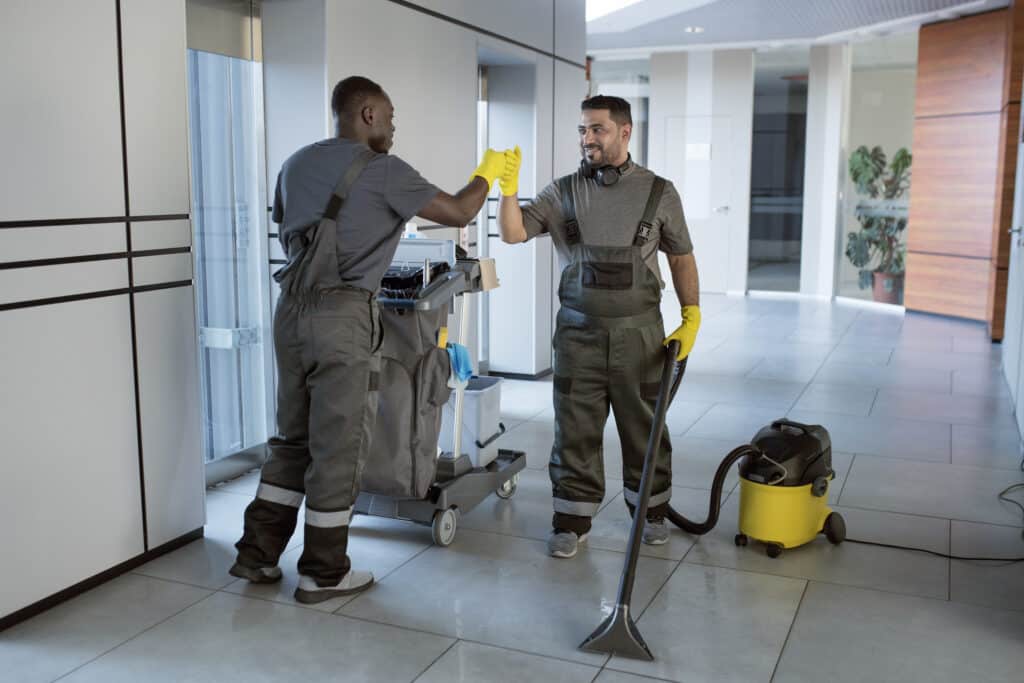
Leadership sets the tone, post OSHA posters, hold toolbox talks weekly. Empower workers to halt unsafe tasks without fear. Recognize safe behaviors with shout-outs or bonuses.
Metrics track progress: aim for zero lost-time incidents. Audits every six months refine programs. Partner with clients for joint safety walks in shared NYC spaces.
This culture slashes incidents by 40%, boosting morale and retention.
Annual third-party audits verify compliance. Self-inspections use OSHA checklists, scoring areas like PPE storage or training logs.
Root cause analysis digs into near-misses, replace “human error” with systemic fixes like better labeling. Tech like apps for digital checklists speeds documentation.
Benchmark against industry leaders to elevate standards.
Safe operations cut workers’ comp claims by half, stabilizing insurance rates. Clients prefer vetted cleaners, securing repeat contracts. Reputation grows through Google reviews praising safety-first approaches.
Long-term, it builds trust, workers stay longer, productivity rises.
XYZ Cleaning leads office cleaning in NYC with full OSHA compliance, top-tier PPE, and proven risk prevention. Their trained teams handle industrial challenges safely and efficiently. Choose XYZ Cleaning for spotless spaces without compromise, contact them today!