Phone:
(516)349-8800
Physical address:
958 W Jericho Turnpike, Smithtown, NY 11787
50 Years in Business | Est. 1975
50 Years in Business | Est. 1975
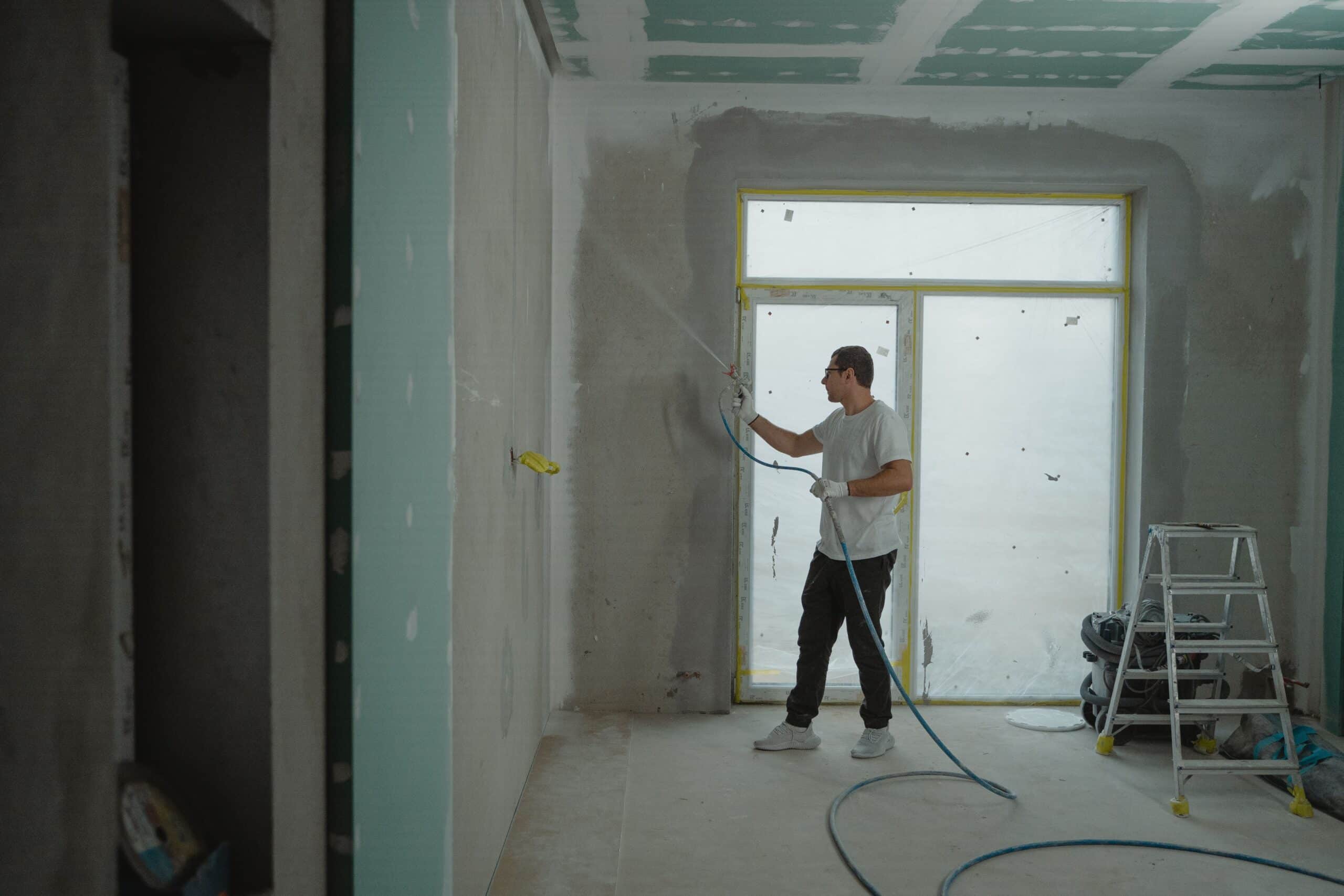
Construction dust hazards can affect your health long after a renovation or construction project is finished. Fine particles from drywall, concrete, wood, and masonry stay in the air, spread through buildings, and may cause serious lung diseases if they are not controlled and removed properly.
Construction projects happen every day across Long Island, from kitchen remodels in Huntington and home additions in Smithtown to commercial renovations in Melville and Ronkonkoma. While most people notice the visible mess, the greatest danger often comes from the dust they cannot see. Understanding construction dust hazards helps homeowners, contractors, and property managers protect everyone inside the building.
Construction dust hazards are often underestimated because many harmful particles are microscopic. Once they become airborne, they can remain suspended for hours before settling on floors, furniture, HVAC systems, and personal belongings.
According to the Occupational Safety and Health Administration (OSHA) and the U.S. Environmental Protection Agency (EPA), controlling dust at its source through proper containment, ventilation, and filtration is one of the most effective ways to reduce exposure.
Construction dust comes from many building materials, including:
Many Long Island homes were built decades ago. Renovating older properties may disturb lead paint or asbestos-containing materials. These materials need specialized testing and handling before any work begins.
Construction dust contains particles of different sizes. Larger particles settle quickly, while the finest particles remain airborne and travel deeper into the lungs.
Many hazardous particles are small enough to pass through the body’s natural defenses. Breathing them repeatedly increases the risk of permanent lung damage.
Different materials create different risks.
Drywall dust contains gypsum, silica, mica, talc, and other additives. While brief exposure usually causes irritation, breathing large amounts during renovations can affect the respiratory system.
Many homeowners search for how to get rid of drywall dust after remodeling because it spreads throughout the home, even into rooms where no work took place.
Cutting concrete, grinding brick, or drilling into masonry releases crystalline silica.
Repeated silica dust exposure construction work can lead to serious diseases that often develop slowly over many years. Workers may not notice symptoms until permanent damage has already occurred.
Wood dust from sanding hardwood floors, cabinets, or trim irritates the nose and lungs. Long-term occupational exposure to certain hardwood dusts has also been associated with an increased risk of cancer.
Health problems depend on the material, concentration, and length of exposure.
Short-term symptoms include:
Long-term exposure creates much more serious health concerns.
Silicosis develops when silica particles scar lung tissue. There is no cure, and lung damage cannot be reversed.
Construction workers exposed to dust over many years have a higher risk of developing COPD. The disease gradually limits airflow and makes breathing increasingly difficult.
The International Agency for Research on Cancer classifies crystalline silica and several wood dusts as known human carcinogens. Long-term occupational exposure increases the risk of lung cancer.
Construction dust may trigger asthma attacks or contribute to developing asthma. Chronic bronchitis and reduced lung function are also common among people with repeated exposure.
Smoking increases these risks even further because tobacco smoke and airborne dust damage the lungs together.
Construction dust does not only affect contractors.
People with higher exposure include:
Schools, healthcare facilities, offices, apartment buildings, and retail spaces across Nassau and Suffolk Counties also need careful dust control during remodeling projects to protect occupants.
Drywall dust spreads quickly because the particles are extremely light. Dry sweeping often makes the problem worse by sending dust back into the air.
A safer cleaning process includes several steps.
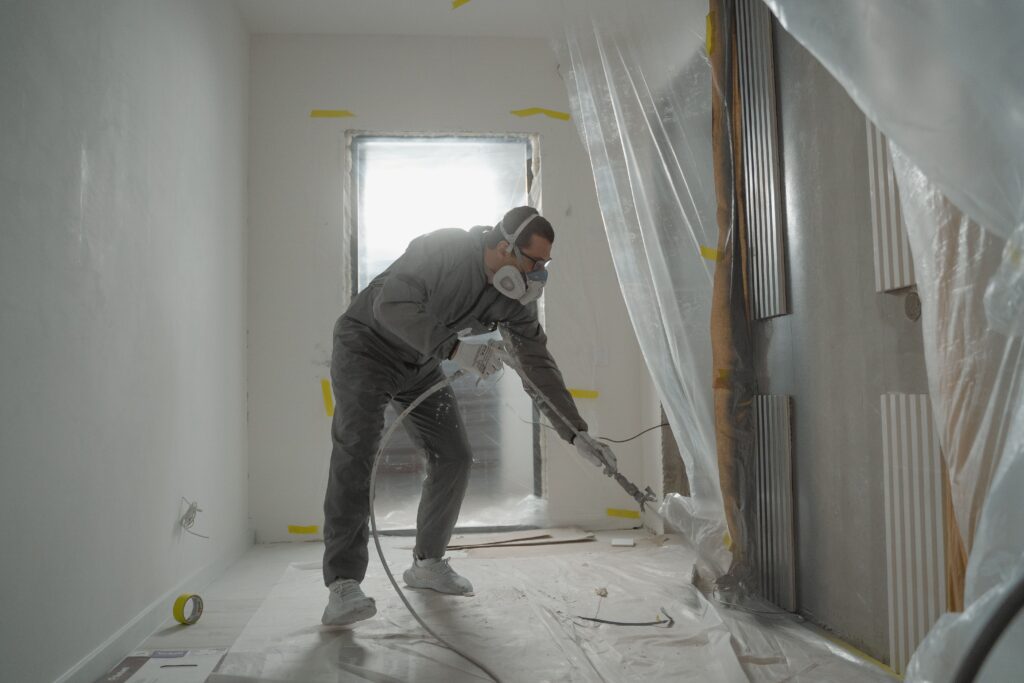
Before construction begins, seal doorways with plastic sheeting to keep dust contained within the work area. Cover HVAC vents to prevent fine particles from entering the ventilation system and spreading throughout the building. Limiting movement between clean and dusty areas also helps reduce the amount of dust tracked into other parts of the property.
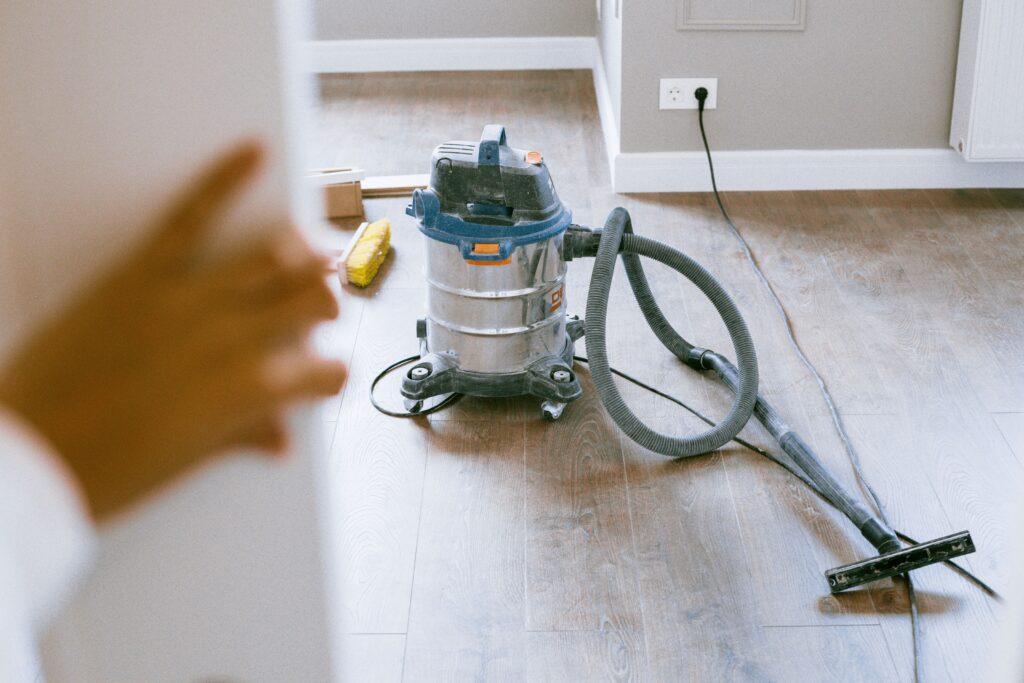
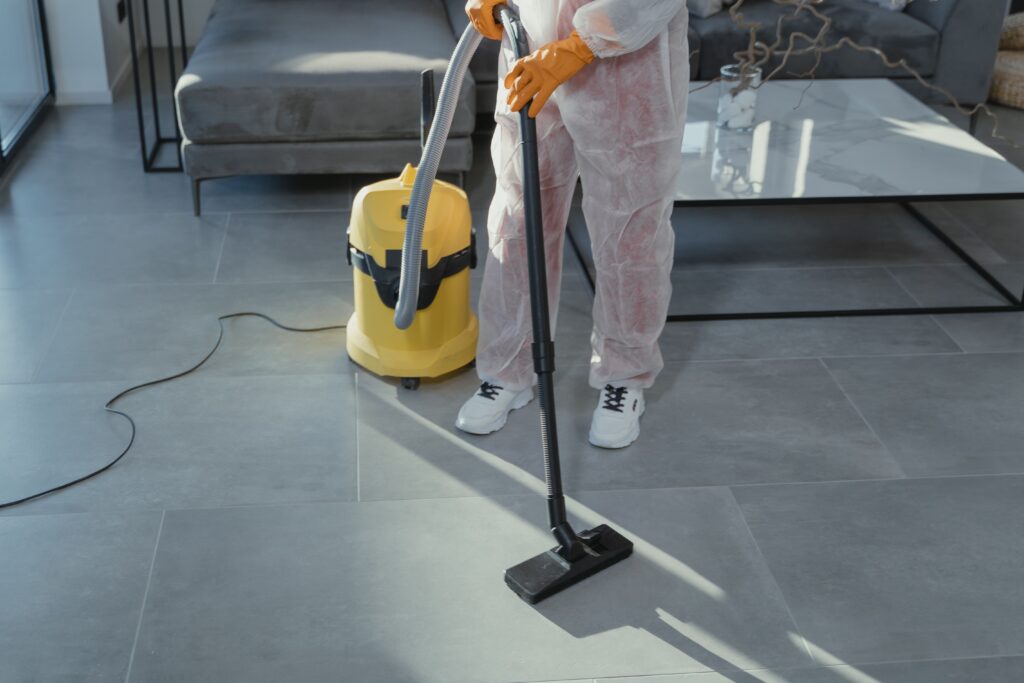
Ordinary household vacuums often release fine construction dust back into the air because they are not designed to capture microscopic particles. Professional HEPA vacuums trap extremely small particles and prevent them from becoming airborne again during cleaning. HEPA air scrubbers further improve indoor air quality by continuously filtering suspended dust while cleanup is underway.
After vacuuming, wipe all surfaces using damp microfiber cloths.
Clean:
Rinse cleaning cloths often to avoid spreading dust.
Dust falls downward during cleaning.
Always follow this order:
Dust frequently enters heating and cooling systems during construction.
Replacing HVAC filters after cleanup helps improve indoor air quality and prevents particles from circulating throughout the building.
HEPA filters remove at least 99.97% of particles measuring 0.3 microns under standardized testing.
Professional post-construction cleaning companies in Long Island often combine several systems to improve indoor air quality, including:
The EPA’s dust control best management practices recommend controlling dust before it spreads by using wet methods, proper containment, and effective filtration. These practices reduce airborne particles and improve safety throughout the project.
Waiting until construction is complete allows dust to spread throughout the property.
A better approach is controlling dust every day while work is underway.
Follow these best practices:
A simple rule works well during cleanup. If dust becomes visible in the air while cleaning, the method should be changed.
Professional cleaning is recommended after:
Professional crews use commercial-grade equipment that removes particles ordinary cleaning supplies often leave behind. They also know how to prevent cross-contamination between work areas and occupied spaces.
For businesses across Long Island, professional post-construction cleaning also helps prepare buildings for inspections, employee occupancy, and customer reopening.
Yes. Fine construction dust settles into carpets, furniture, ductwork, and HVAC systems, where it can remain for weeks. Walking through the building or running the heating and cooling system can stir these particles back into the air if they were not removed using proper HEPA filtration and damp cleaning methods.
Fine drywall dust can remain airborne for several hours, depending on ventilation and airflow. While larger particles settle more quickly, finer dust continues circulating through the building until it is removed with HEPA filtration and damp cleaning methods that prevent it from becoming airborne again.
Small amounts of drywall dust usually cause temporary irritation to the eyes, nose, throat, and lungs. Repeated or heavy exposure can affect the respiratory system over time. Some drywall compounds also contain silica, making proper dust control, HEPA filtration, and thorough cleanup important for reducing health risks.
Yes. Repeated exposure to silica dust can lead to silicosis, COPD, lung cancer, and other serious respiratory diseases. These conditions often develop gradually over many years, and symptoms may not appear until permanent lung damage has already occurred, making early dust control and prevention critical.
No. Most household vacuums are not designed to capture extremely fine construction dust, and many release microscopic particles back into the air through their exhaust. HEPA-filter vacuums trap these particles more effectively, making them the safer and more effective choice for post-construction cleanup.
Start by vacuuming with HEPA-filter equipment to capture fine dust, then wipe all surfaces with damp microfiber cloths. Clean from the highest surfaces down to the floors, replace HVAC filters after the project, and avoid dry sweeping or compressed air because they send dust back into the air.
If construction dust enters the HVAC system, professional duct cleaning can help improve indoor air quality by removing accumulated debris from the ductwork. Replacing HVAC filters is important, but it may not eliminate fine dust that has settled inside the system after larger renovation or demolition projects.
Construction dust hazards can affect air quality long after a project is complete. Fine particles from drywall, concrete, silica, and wood can spread throughout a property, creating health risks if they are not removed using proper cleaning methods and equipment. Homes and businesses across Long Island often benefit from professional post-construction cleaning to safely eliminate these construction dust hazards and prepare the space for occupancy.
XYZ provides professional post-construction cleaning services for residential and commercial properties throughout Long Island. Our team uses commercial HEPA filtration, specialized equipment, and proven cleaning methods to remove dust hazards, improve indoor air quality, and leave your property clean, safe, and ready for move-in, reopening, or final inspection.
Contact us for professional post-construction cleaning services on Long Island.